Learnings From AWIN ThinkTank
Affiliate Does More Than Win the Last Click
Last week we attended Awin ThinkTank UK 2026. It was an interesting event and it showed us some interesting stats on how AI-assisted customer journeys, basket value, and brand marketing and sales attribution is having a big influence in partnerships and how we strategise marketing programmes forward.
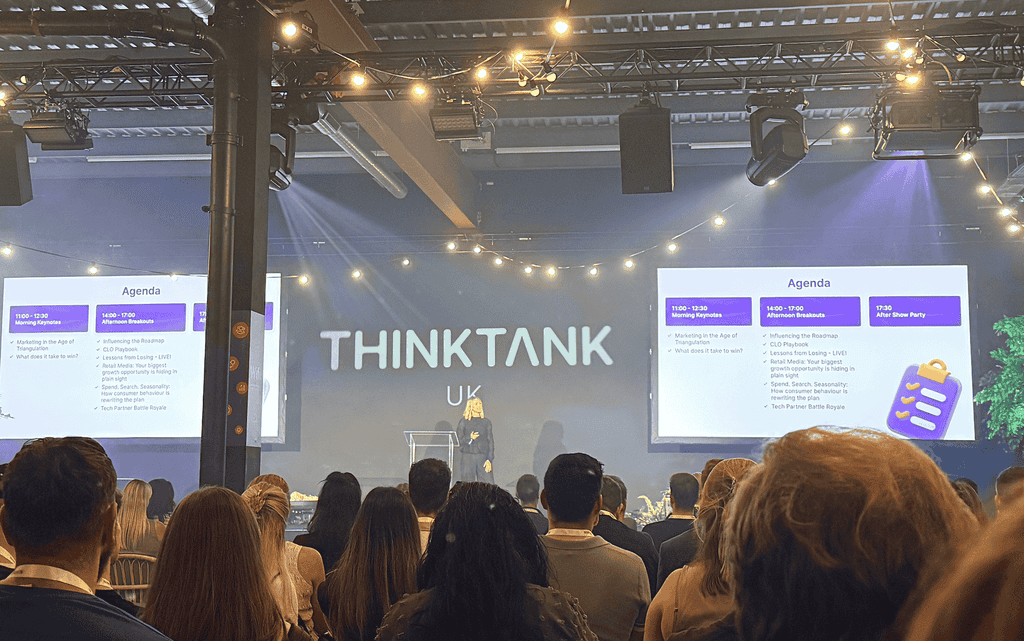
Awin ThinkTank UK 2026 in London. KonverJ attended as a Silver exhibitor and sponsor.
The number we keep coming back to was 177%
Attribution has always made affiliate marketing look neater than it really is. A sale appears in a report, one partner receives the conversion, and the temptation is to treat that final tracked click as the whole story. The sessions at Awin ThinkTank UK made a strong case for why that view is becoming less useful as AI, search, content, creators and publisher touchpoint overlap inside the same buying journey.
Leading the charge and discussion of the day were the first few sessions lead by Dawn Quigg, Awin’s Client Services Director, and keynote speaker Peter Markey, whose broader theme was what it now takes for brands to win when attention is fragmented, organic reach is harder to earn and AI is changing how people discover information online.
The Internet changed media’s monopoly on consumer attention. From Mad Men single message campaigns – to the new murmurations of how consumers enjoy and experience information cross channels online, it’s clear that what we always tracked as affiliate standard – is now changing.
Affiliates are playing a bigger role in consumer search and consideration.
The useful point: if a partner influences research, reassurance, product discovery or comparison before checkout, a last-click report can record the sale while still under-reporting the affiliates contribution to it.

A longer journey does not mean affiliate is less valuable
Quite the opposite. A longer path tells us that the route to purchase is becoming more complicated. A customer may ask an AI tool for ideas, visit a publisher review, return to the brand, compare an offer, search again, use a voucher or loyalty benefit and only then buy. The fact that one of those interactions happens last should not erase the others.
This matters because affiliate is often still judged through reporting models built for a simpler internet. Last-click attribution answers a narrow question: which tracked partner was closest to the transaction? It does not automatically answer which partner introduced the customer, reduced uncertainty, changed product choice, raised confidence or helped create a larger order.
That distinction affects commercial decisions. If a content publisher regularly appears earlier in high-value journeys but rarely closes the sale, cutting that partner because its last-click CPA looks weak may save commission on paper and remove useful influence in practice.
The basket-value data makes the halo effect affiliate programmes offer – a lot harder to ignore

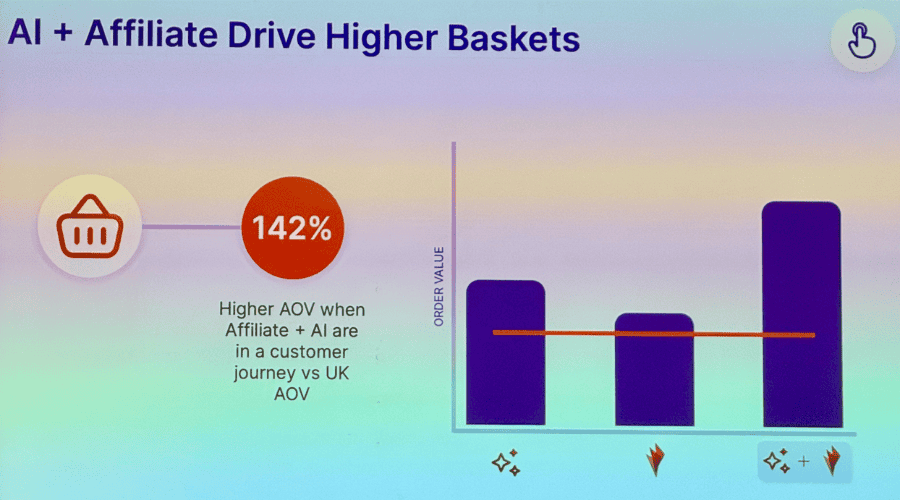
Presentation slide showing 142% higher average order value when affiliate and AI are both present in a customer journey.
That is the statistic affiliate managers should take back to finance and wider marketing teams. The conversation cannot stop at “did the affiliate get the last click?” If journeys containing affiliate touchpoints are also associated with materially higher baskets, the better question is what role those partners are playing in product discovery, consideration and decision confidence.
It also reinforces why programme optimisation should look beyond raw conversion counts. Partner mix, placement type, content depth, new versus existing customers, basket composition and incrementality all matter. The same £100 of attributed revenue can have very different value depending on who the customer is, what they bought and whether the partner genuinely changed the outcome.
Measurement now needs more than one lens
A useful direction for measurement in an AI-influenced world was shared. Rather than forcing every signal into one attribution model, Awin separated the evidence into three types: click-based journey data, query-based data and LLM visit data.
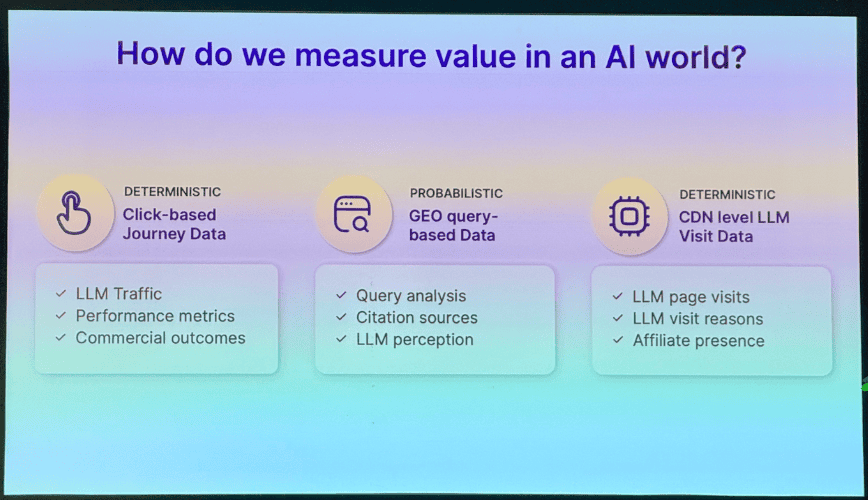
Awin’s proposed measurement view combines deterministic journey data with probabilistic query analysis and deterministic LLM visit data.
The click data is still useful. It gives us LLM traffic, performance metrics and commercial outcomes. But it is no longer the full measurement stack. Query analysis can show which questions are being asked, which sources are being cited and how a brand or product is being perceived inside AI-generated answers. CDN-level data can then add another layer by showing LLM page visits, visit reasons and affiliate presence.
For programme managers, that means measurement is moving from a single winner at the end of the journey towards a body of evidence about contribution. We should expect more discussions about assisted value, publisher influence and incrementality – and fewer decisions made from a last-click column in isolation.
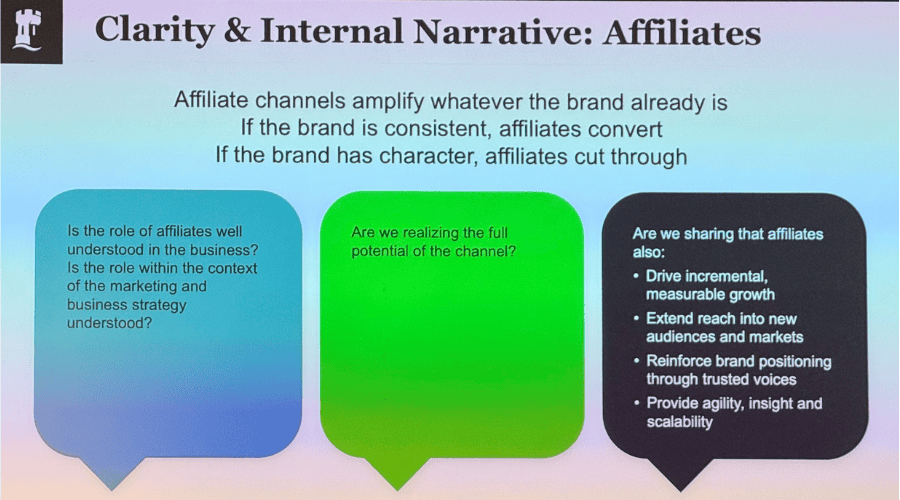
The other theme we found useful was the connection between brand clarity and affiliate performance. The point on the slides was simple: affiliate channels amplify whatever the brand already is. If the brand is consistent, affiliates have something clear to convert. If the brand has character, partners have something distinctive to carry into their own audiences.
This is where the internal narrative around affiliate needs to improve. The channel can drive measurable revenue, but publishers also extend reach into audiences and markets the advertiser may struggle to reach directly. They can reinforce positioning through a voice the customer already trusts. They can also give brands faster feedback on what is resonating outside their owned channels.
That wider value is easy to miss when the affiliate team is only asked for yesterday’s sales number.
Peter Markey’s challenge: Winning requires clarity, consistency and character
Peter Markey’s keynote widened the lens beyond affiliate, but it connected neatly with the channel discussion. His framing of winning brands came down to clarity, consistency and character: know who you are for, behave consistently across touchpoints and give people something recognisable enough to remember.
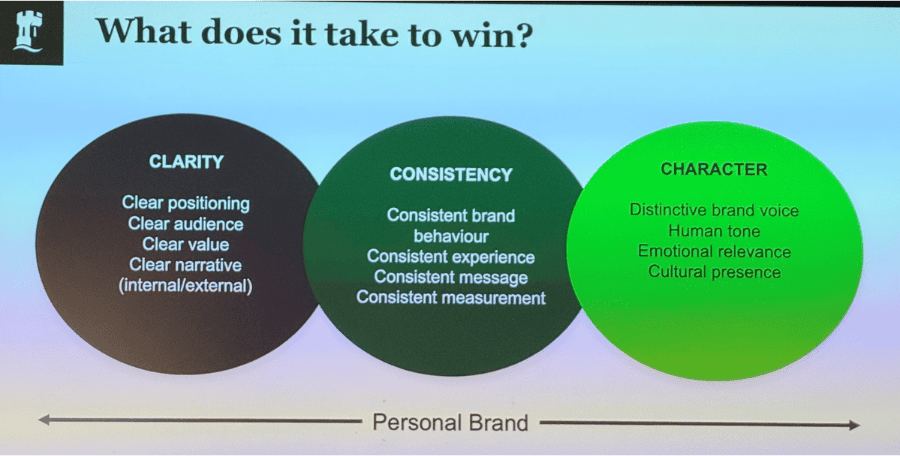
Peter Markey’s framework for winning brands: clarity, consistency and character.
That matters for partnerships because publishers cannot compensate for a muddled proposition forever. A partner can place a brand in front of the right audience, explain an offer and create trust. But if the advertiser’s own site, pricing, product story or checkout experience contradicts the message, the affiliate channel simply amplifies the inconsistency.
The strongest affiliate programmes therefore tend to have a clearer internal answer to a few basic questions: what role should affiliates play in the marketing mix; which customer behaviours are we trying to influence; which partner types are best placed to do that; and what evidence will we use to judge their contribution?
The future of discovery will make this more important, not less
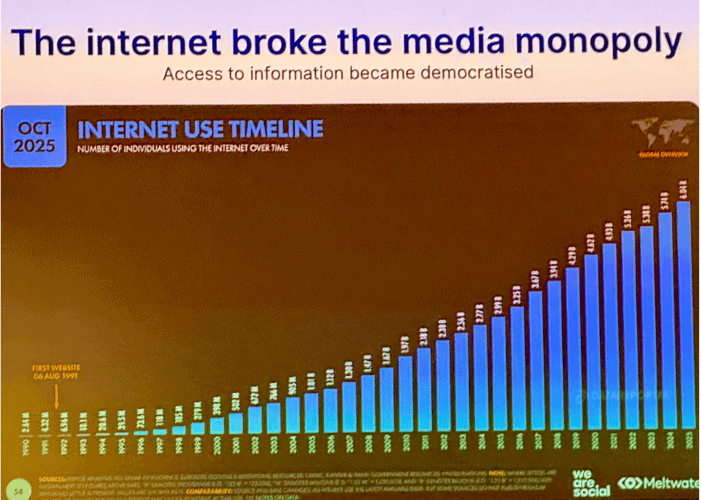
The internet broke the media monopoly, showing the growth of global internet use over time.
The internet broke the old media monopoly by making information widely available. AI is changing the next layer: how that information is selected and presented. Customers can now move from a question to a summarised answer without following the search path marketers have spent years learning to measure.
That creates a new visibility problem for brands. If AI systems are citing publishers, reviews, editorial content and comparison sources, then partnership strategy increasingly affects whether and how a brand appears inside those answers. Affiliate content is not sitting outside the AI discovery layer. In many categories, it may be part of the source material shaping it.
That is why the combination of affiliate measurement and GEO-style query analysis stood out. We are moving towards a world where brands need to understand both the click they can track and the recommendation environment they cannot reduce to a click.
Why KonverJ invests in being in the room at events like this
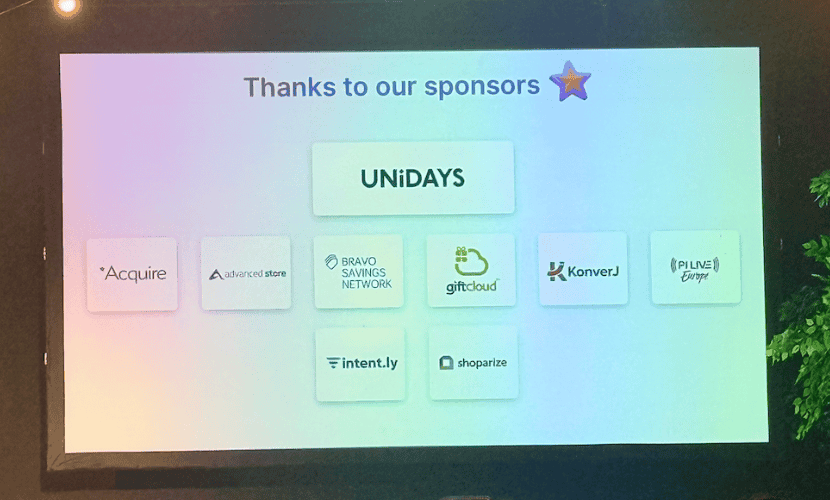
KonverJ was one of the Silver exhibitors supporting Awin ThinkTank UK 2026.
KonverJ sponsored and exhibited at this year’s ThinkTank because agency work should not happen at arm’s length. Our team is invested in building partnerships at scale, at keeping abreast of what’s new and trending in the market and adept at navigating our client forward.
The useful part of events like this is not the logo on the screen. It is access: hearing what networks are seeing across thousands of journeys, challenging the measurement assumptions behind the data, and speaking directly with publishers and technology partners about what is changing.
Our clients benefit from that proximity.
When a new publisher model, measurement approach or AI discovery behaviour starts to affect programme performance, we want to be at the forefront dissipating the information to context for our clients and discussing it while the industry is still working through the implications – not six months later after it has become a webinar or new trend.
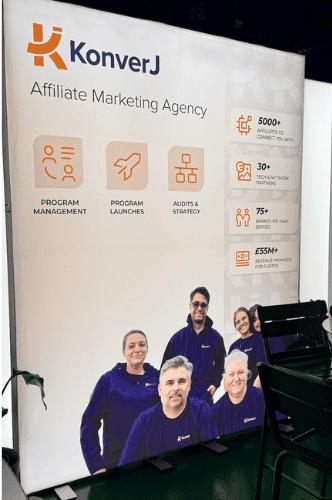
Our ThinkTank presence gave the KonverJ team a base for publisher, network and client conversations throughout the day.
It also creates practical opportunities for the brands we manage. Publisher events make it easier to put the right people together, test ideas quickly, find new partnership routes and give existing partners more context on what the advertiser is trying to achieve. Good programme management still depends on those relationships.
What I would take back to an affiliate programme tomorrow
Stop treating last click as a complete explanation.
Keep it as one reporting view, but compare it with assisted paths, customer quality, AOV and incrementality before changing partner investment.
Map where partner types appear in the journey.
Content, comparison, loyalty, voucher, creator and technology partners do different jobs. A single CPA target can hide that.
Measure the basket, not only the conversion.
If certain partner combinations correlate with higher order values or better product mix, that belongs in the commercial evaluation.
Watch AI discovery as a partnership issue.
Track the queries customers use, the sources AI systems cite and whether affiliate content is present in those answers.
Give affiliate a clearer internal narrative.
The channel should be able to explain reach, influence and incremental customer value – not only the revenue credited on last click.
The reporting model has to catch up with the customer
The customer journey is already multi-touch. AI is making it more so. If a reporting model insists on crowning one final interaction as the sole source of value, the model is simplifying the journey for our convenience rather than describing what the customer actually did.
For me, that was the most useful thread running through ThinkTank: affiliate has a measurable sales role, but its influence can begin well before the last click and can show up in the quality and value of the eventual order. The job now is to build measurement that can see more of that contribution.
And that is exactly why we keep investing time and budget in industry forums like Awin ThinkTank. Our clients should benefit from the conversations happening between networks, publishers, technology partners and agencies while the next version of affiliate marketing is being built.

All substantive event takeaways and statistics and event materials/photos were sourced from the Live 2026 Awin ThinkTank event
KonverJ’ agency team has been fully certified with Webgains, a leading UK affiliate network, strengthening its knowledge of the network,…
Read More
KonverJ leadership strengthens industry support as CEO Lee-Ann Johnstone joins the Performance Marketing Association’s new B2B Council. KonverJ is proud…
Read More
KonverJ founder and CEO Lee-Ann Johnstone has been named in the PMW UK Top 25 Power 100 list for 2026,…
Read More