Return on Impact: what do you actually want your affiliate partners to deliver?
The outcome you want in your affiliate programme should determine everything from your partner strategy, to your budget and your definitions of what “pay for performance” means to your business.
We have spent years asking the same question in affiliate marketing: what return did we get on our client’s affiliate investment?
It is a useful question, but it often comes far too late in the programme launch and maintenance process.
Before we ask what a partnership programme has returned for you, we need to ask what we wanted these partnerships to change.
- Did we need to reach new customers?
- Build confidence in an unfamiliar product?
- Generate qualified demand?
- Repeat convert an existing audience or increase basket values?
- Encourage brand awareness?
These are the different jobs an affiliate programme can now deliver on outside of the traditional incremental sales most marketers expect from an affiliate programme. The fact is affiliate is no longer bottom of funnel it plays across the entire spectrum of the customer acquisition process and now impacts cross channel marketing efforts online and offline too.
Affiliate programs have gotten complex, the variety of partners you work with requires a need for different commercial arrangements, management tactics, offers, promotions and even product offerings and all of these are also measured and defined by different success metrics.
At KonverJ, our view on developing an appropriate affiliate programme strategy is simple: We start with the impact you need. Let that outcome shape the investment and then apply that to strategy so that we are delivering the right impact on your investment in the partnership space.
The funnel is broken and cannot be used as the basis of building your partner planning model
The familiar customer shopping funnel gives us a tidy progression: awareness, consideration, conversion. The difficulty begins when we treat that diagram as a fixed description of where and how people now search, review and buy and how each partner type influences that process.
A creator can introduce a product, explain it and trigger a purchase in one piece of content. A specialist publisher can help someone discover a category and return weeks later to help them choose based on price. A community or closed group offering can influence a customer to purchase without ever receiving payment for the final click. Partners can now perform several roles. Customers can revisit decisions, switch channels and seek reassurance after they have already decided to buy.
Simply calling an affiliate programme “full funnel” does not solve this.
If the budget still follows last-click sales, the programme will keep favouring the partners that capture the customer at the end of their purchasing journey. The contribution that created demand or built confidence can remain underfunded and under valued in the overall tracking process that is being measured in your company.
The funnel, of course – can help describe customer activity. It becomes a problem when it dictates value.
Creator commerce makes the question of impact an affiliate programme can deliver – more urgent
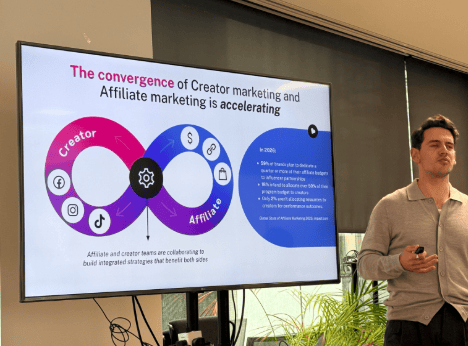
The convergence of creator and affiliate marketing brings this tension of tracing incremental value into stronger focus. Content, trust and transactions increasingly sit within the same partnership mix.
In its Global State of Affiliate Marketing in 2025 report, impact.com found that 59% of surveyed brands planned to dedicate at least a quarter of their affiliate budgets to influencer partnerships in the following year. That planned investment raises a strategic question: what are those partnerships being funded to achieve?
A creator brief designed to explain a complex product should look different from one designed to convert an audience already familiar with it. Paying both partners the same way and judging both on immediate sales based on last click tracking – can obscure the value of the work being delivered in the affiliate programme by partner vs other paid or organic customer acquisition channels.
Strategy should lead performance decisions
So how do you work around all of this complexity? You start with the business constraint you want to fix first. Ask the question – Where is growth getting stuck? What do we need to do to augment direct consumer sales, where do we need to get competitive in our marketing strategy to meet customers where they are online. What is the outcome we want partners to deliver for our business right now, and know it may change again in 6/12 months time.
If too few relevant people know you exist, more conversion activity may do little to expand demand. If people are interested but uncertain, the priority may be demonstrations, reviews or expert reassurance. If you attract customers who never return, acquisition volume alone will not fix the underlying economics.
The useful sequence we use to plan your programme strategy is: business objective → customer barrier → partner role → budget → identify evidence of impact.
That changes the budget conversation from “Which partner type usually gets the most sales?” to “Which contribution of impact do we need to fund to reach our overall sales goal?”
| Desired impact | Potential partner contribution | Evidence to assess |
| Reach relevant new audiences | Creators, specialist publishers and communities introduce the brand | Relevant audience reach, qualified new visitors and awareness lift where measurable |
| Build purchase confidence | Experts, reviewers and educators answer objections | Engaged product visits, qualified enquiries and assisted conversion paths |
| Acquire profitable new customers | Partners connect audience intent with a relevant offer | New-customer acquisition cost, contribution margin and incremental sales |
| Generate qualified B2B demand | Industry voices and referral partners introduce suitable prospects | Sales-accepted leads, pipeline progression and closed revenue |
| Improve repeat purchase | Relevant partners support ongoing use and renewed interest | Repeat-purchase behaviour, retention and customer value over an agreed period |
These are possible roles for partners to deliver upon, not permanent boxes they need to be measured and incentivised by. Select the partners you onboard into your programme based on evidence that they can deliver the contribution and exact impact you currently need.
Pay appropriately for the impact contribution you are asking for
A commission-only arrangement can work well when a partner has a realistic route to generating attributable sales. Content production, specialist education or access to a trusted community may require a fee, a hybrid model or a milestone-based agreement.
The payment model should support the brief. Agree what will be delivered, which audience it will serve, what success looks like and when you will review it.
There is no universal or standardised affiliate programme budget split. Allocate against your growth constraint, allow enough time and funding to test the contribution, then adjust using the evidence.
Impact still needs commercial accountability
Return on impact is a planning lens, not a replacement financial formula. Profitability still matters.
Reach and engagement can tell you whether activity is getting attention. They do not, by themselves, prove commercial impact. Likewise, an attributed sale tells you who received credit; it does not prove the sale would have disappeared without that partner.
Use the strongest measurement your programme can support. Track relevant events, review customer quality and assess assisted journeys. Where feasible, use controlled tests or holdout groups to investigate incremental effects. Keep attribution and causal evidence distinct.
For each partnership, agree on one primary outcome, supporting indicators, a review window and commercial guardrails. Then decide whether to scale, refine or stop.
Ask better impact delivery questions -before allocating the budget
The next partner planning meeting should begin with this:
What change do we need our partners to create, and what evidence would convince us that it happened?
That question gives your affiliate programme a purpose.
It helps you select the right partners to invest in for their impact contribution, and it allows you to understand how best to fund the work required to reach your goals, and allows you to assess performance against the outcome you actually wanted.
A simple step by step planning process could simply be:
- Define the impact.
- Build the strategy.
- Apportion the budget.
- Measure the results.
At KonverJ, we help brands align partner strategy, build successful affiliate programmes and help define impact leading commercial models and measurement to showcase and deliver the right growth objectives.
Need help growing your affiliate programme?
Search your own brand name right now. Not your product. Your company. There’s a real chance the top result isn’t…
Read More
Everyone who has run an affiliate program for more than a year has the same story. A ticket goes in….
Read More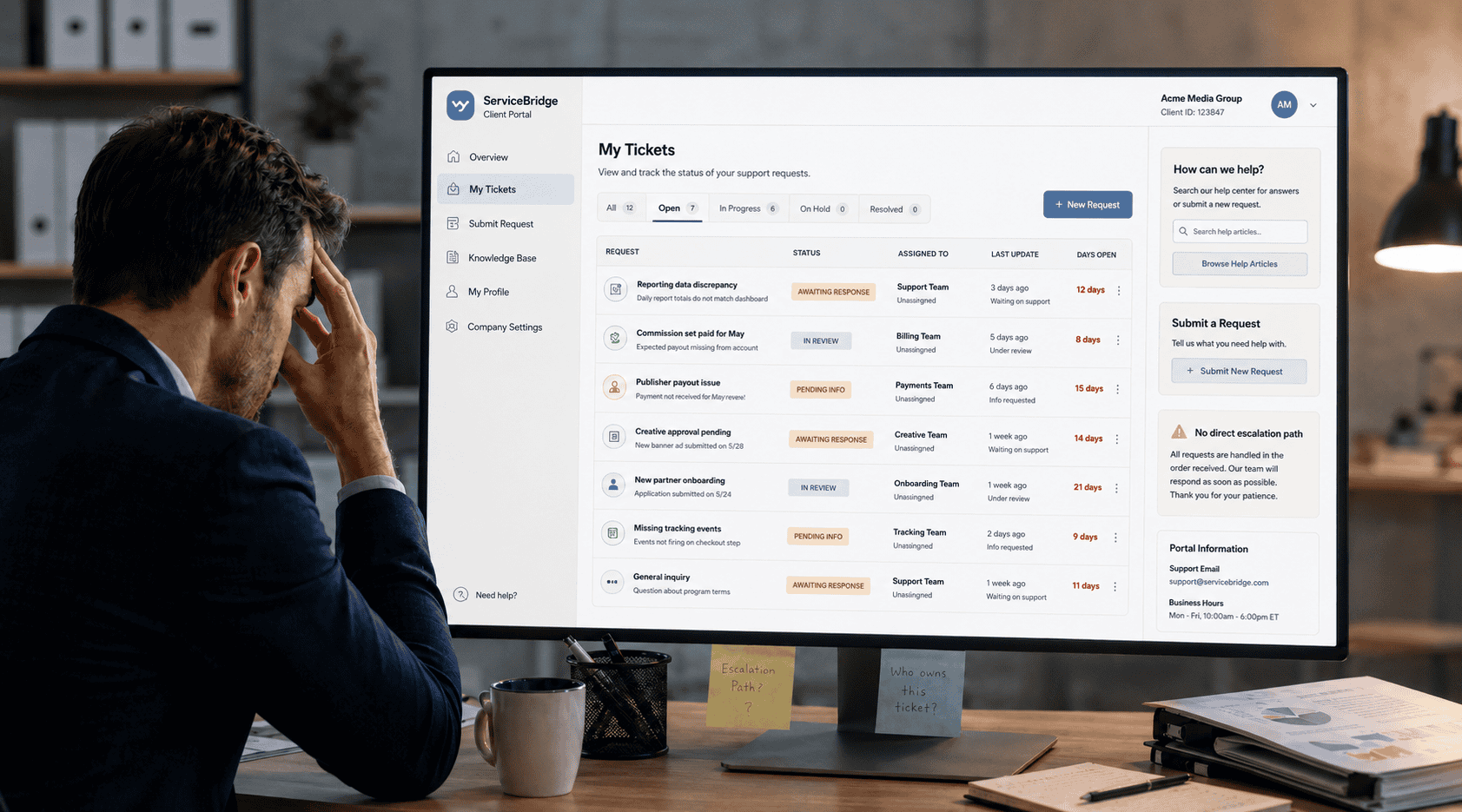
When did you last sit down and properly review the commercial terms your affiliate program is running on? Not glance…
Read More