Zero Click Is Here. Open Attribution Is the Fight Back.
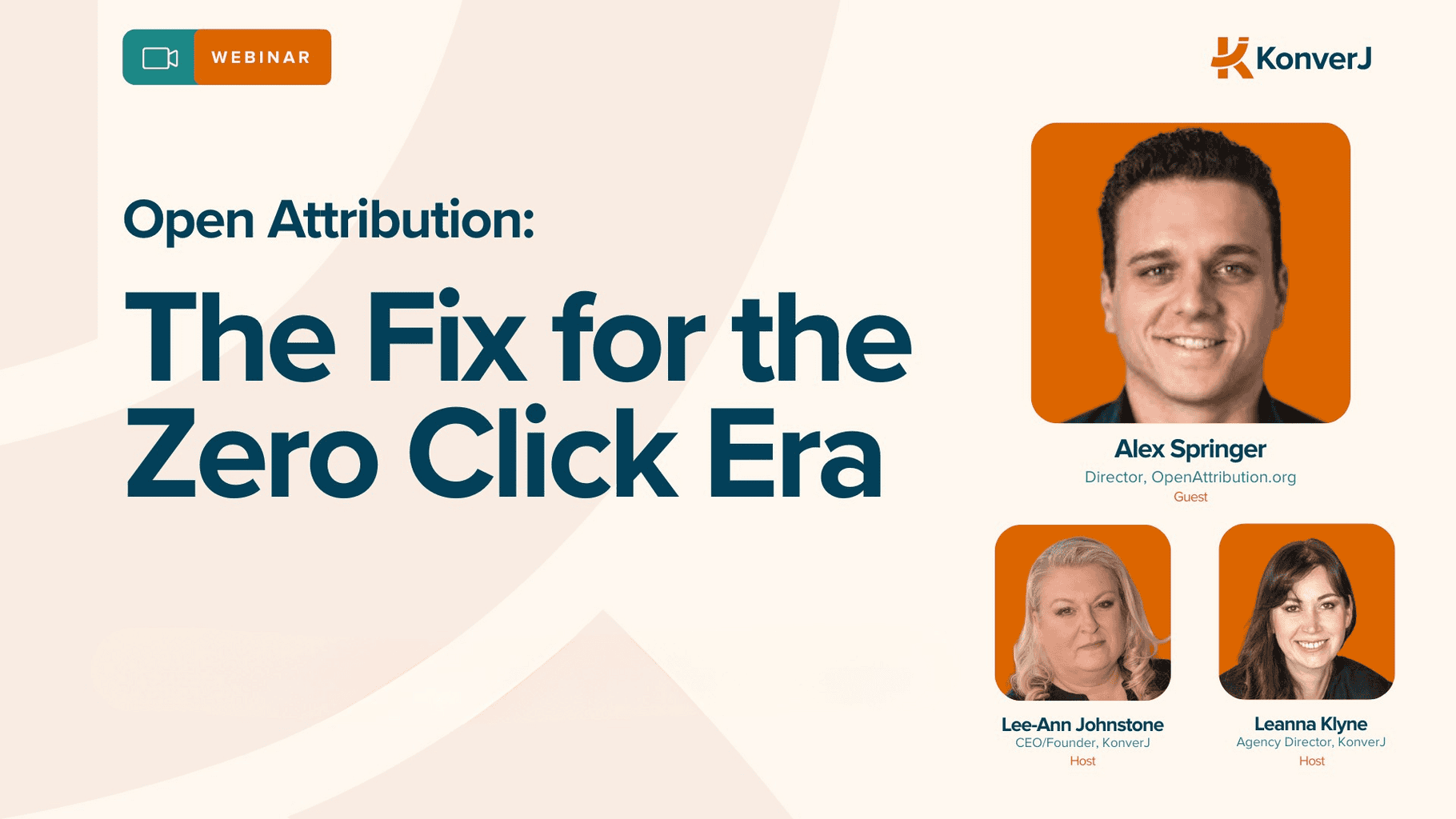
Watch the KonverJ webinar replay.
For years, performance marketing has relied on a simple story:
Search, click, read, click a partner link, buy.
That story is breaking.
Search is evolving into answers, summaries, and AI experiences that don’t always send traffic. People are still researching and still buying, but more of the journey is happening inside AI layers like ChatGPT, Gemini, and AI Overviews.
Influence is still there. The click is not always.
That is what people mean by zero click, and it is why Open Attribution is suddenly one of the hottest topics in performance marketing.
If you want the full breakdown, watch the replay now:
Watch the KonverJ webinar.
What do we mean by “zero click”?
Zero click is when a user gets what they need without clicking through to a website.
In an AI search world, this can look like:
- AI summarising product research and recommending options directly
- AI pulling in snippets from reviews, guides, or product pages without sending traffic back
- AI becoming the interface, so the user stays in the chat while the “work” happens behind the scenes
The customer still discovers brands. They still compare. They still decide. But the traditional “click path” we have used for attribution is no longer the centre of gravity.
Why last click breaks even harder in an AI world
Last click has been a flawed proxy for influence for a long time. AI just makes the weakness impossible to ignore.
Now the “moment of influence” can happen inside the AI experience, while the “moment of transaction” happens elsewhere. If you only measure the final tracked click, you miss what shaped the decision.
That is where this conversation starts.
And it is exactly what we unpacked in our KonverJ webinar with Alex Springer, Director at OpenAttribution.org.
What is Open Attribution?
OpenAttribution.org is a cross-industry initiative focused on one thing: transparency.
Not a single platform’s closed solution. Not something owned by one company. An open, neutral approach that helps the industry understand how content is used inside AI systems and how that usage connects to outcomes.
And when we say “content owners,” we mean everyone:
- Publishers and review sites
- Creators and influencers
- Brands (product feeds and product pages are content too)
The core belief is simple:
Content owners should be able to see how their work is used and should be fairly remunerated for it.
Right now, neither of those things are consistently true.
The simple idea at the heart of Open Attribution
Open Attribution is not trying to solve everything.
It is not an AEO tool.
It is not a paywall system.
It is not a content marketplace.
It is focused on one key gap:
When an AI system forms an answer, can it show its work in a standardised way?
The proposed starting point is intentionally lightweight:
A structured list of URLs that were cited or used during the AI conversation, packaged consistently so it can be attached to an outcome.
Why does that matter?
Because if we can connect “what influenced the answer” to “what happened next,” we can finally start measuring influence again, not just clicks.
What should brands and performance teams do now?
This is the part most people care about.
Here are the practical takeaways we covered:
1. Do not treat this as “a publisher problem”
Brands have content too, and AI will represent your products and your claims. You should care about transparency and accuracy as much as any publisher does.
2. Push for transparency when platforms pitch agent-led shopping
Commerce protocols are emerging that allow agents to purchase on behalf of users. If money is being spent, brands need to know what they are paying for.
3. Use AI visibility tools, but do not trust them blindly
AEO and GEO tools can be helpful directional signals, but they are not deterministic and low-quality sources can manipulate AI visibility.
4. Get involved
Open Attribution is designed as a coalition, because collective pressure is the only way transparency becomes non-negotiable.
Watch the webinar replay
This space is moving fast, and this is one of those topics you want to understand before your reporting starts looking “off.”
Want to talk through what this means for your program?
If you want help pressure testing what this means for your affiliate or partner program, and how to prepare your tracking and strategy for an AI-shaped customer journey:
KonverJ’ agency team has been fully certified with Webgains, a leading UK affiliate network, strengthening its knowledge of the network,…
Read More
Affiliate Does More Than Win the Last Click Last week we attended Awin ThinkTank UK 2026. It was an interesting…
Read More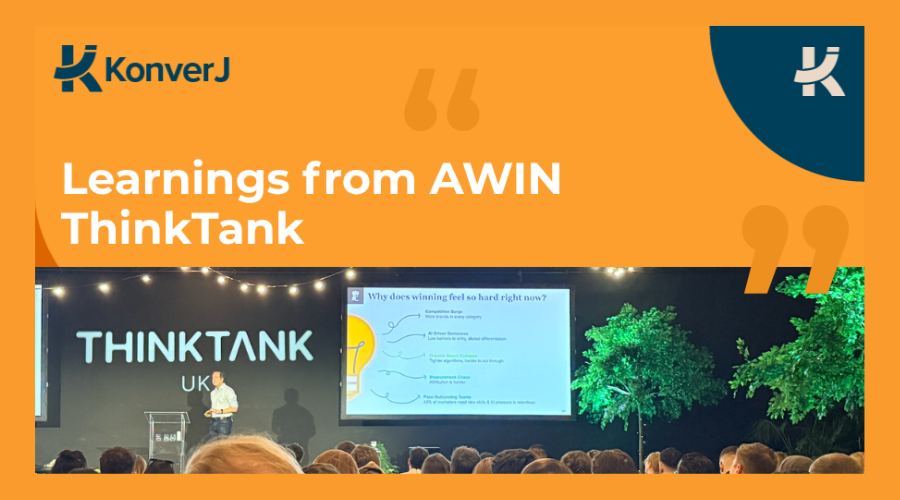
KonverJ leadership strengthens industry support as CEO Lee-Ann Johnstone joins the Performance Marketing Association’s new B2B Council. KonverJ is proud…
Read More