Google Discover Pivots to YouTube and X: What the Shift Away from Publishers Means for Affiliates
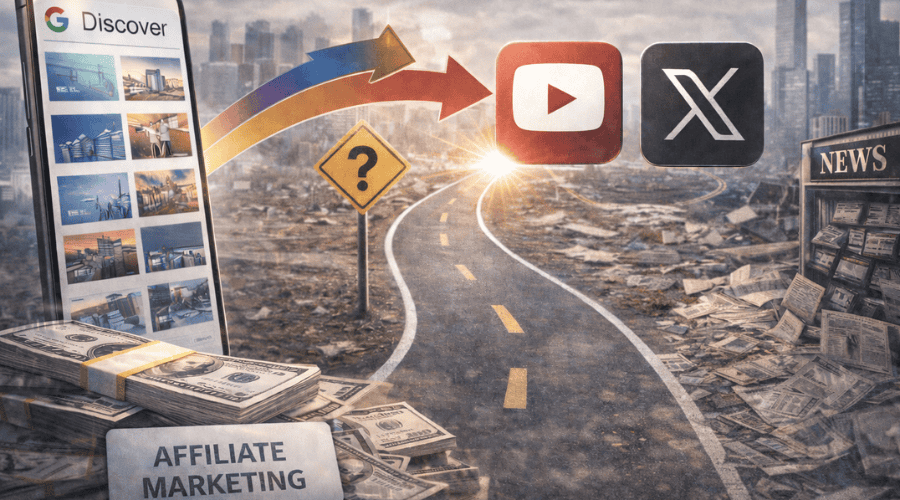
Google Discover is undergoing a fundamental transformation that should alarm any affiliate marketer still relying on it as a traffic source. New research from Marfeel reveals the platform is rapidly shifting from a publisher distribution channel into an engagement retention layer designed to keep users within Google’s ecosystem.
The changes are already rolling out across multiple markets. In the US, Brazil, and Mexico, 51% of the Google Discover feed now comprises AI summaries constructed specifically to promote videos on YouTube, Google’s owned video platform. When users interact with these AI summaries, 77% of resulting clicks go to YouTube rather than to the publishers whose work the content is based upon.
For affiliate content publishers who have built traffic strategies around Discover visibility, this represents a direct threat to their business model. As Xavi Beumala from Marfeel warned in the research update, “Google Discover is no longer a publisher-first surface. It’s becoming an AI platform with YouTube and X absorbing real estate that once went to newsrooms.”
The Scale of What’s Changing
The research findings reveal systematic reallocation of feed positioning away from traditional publisher content. AI summaries become more prominent the further users scroll on Discover, making up more than 80% of posts after position 20. This means that even publishers who maintain some early-feed visibility face diminished exposure as users engage more deeply with the platform.
X posts are flooding lower positions on Discover in the UK, Australia, and Canada, where they account for the vast majority of posts after position 20. According to Reach SEO and Discover director Nicola Agius, X became the website domain attracting the most traffic on Google Discover in the UK in December 2024, with visibility surging following Google’s December core algorithm update.
This follows Google’s announcement at Search Central Live in Zurich in November 2025 that they were “updating Discover to make it even easier to find, follow and engage with the content and creators users care about most.” That phrasing now reads as a clear signal of the prioritisation shift toward creator platforms over traditional publishers.
Why This Matters More Than Previous Algorithm Changes
Previous Google algorithm updates affected which publishers received traffic. This Discover transformation affects whether publishers receive meaningful traffic at all. The distinction is critical for understanding the strategic implications.
When AI summaries cite multiple publisher sources but direct the primary call-to-action to YouTube videos, publishers contribute the research and reporting that makes content possible while YouTube captures the engagement and monetisable attention. The zero-click search problem that has devastated organic search traffic is now extending into content aggregation feeds that once served as reliable referral sources.
Previous Press Gazette reporting found that two-thirds of Google traffic to leading UK and US publishers came via Discover, making it the single biggest source of referral traffic for many news organisations. The shift toward AI summaries and platform content threatens to collapse that traffic channel for affiliate publishers who have invested in Discover optimisation.
The Broader Pattern of Platform Consolidation
Google’s Discover changes align with a broader pattern we’ve documented in our coverage of how AI is reshaping influence and attribution. Platforms are increasingly engineering experiences that retain user attention within their ecosystems rather than distributing it to external publishers.
Beumala’s assessment captures this precisely: “Discover is evolving from ‘traffic distributor’ to ‘engagement retention layer inside Google’s ecosystem’.” For affiliate marketers, this means that content may feed AI answers or YouTube journeys without generating monetisable outcomes.
The pattern extends beyond Discover. Google’s December core algorithm update appears coordinated with Discover changes to systematically favour platform content over independent publishers. When Google announced the addition of posts from X, Instagram, and YouTube Shorts in September 2025, they indicated “more platforms to come,” suggesting Facebook, Instagram, and TikTok content may also start flowing into the Discover feed.
Strategic Implications for Affiliate Publishers
The Discover changes accelerate trends that have been building throughout 2025. Alternative traffic channels have become essential rather than optional for affiliate publishers who have historically relied on Google distribution.
Treat Discover as a volatile dependency, not a reliable growth engine. Beumala’s advice reflects the new reality. Publishers who have built traffic strategies around Discover visibility need to diversify before the full rollout of AI summary dominance reaches their markets.
YouTube presence becomes strategically important. If Google’s AI summaries are engineered to drive clicks to YouTube rather than traditional publishers, affiliate marketers need to consider whether YouTube content production deserves higher priority in their channel mix. The YouTube Shopping affiliate program and broader video commerce capabilities make this pivot potentially viable, though it requires fundamentally different content creation capabilities.
Content authority may matter more than Discover optimisation. The AI summaries cite multiple publisher sources to construct their responses. Building content that AI systems reference when making recommendations could maintain some influence even as direct traffic declines. This aligns with the SEO predictions for 2026 that emphasise AI citation as a new form of visibility.
Social platform content gains distribution advantages. X’s surge in Discover visibility suggests that content published on major social platforms may receive preferential treatment over content published on independent websites. Affiliate marketers may need to reconsider where they publish content, not just how they optimise it.
The Two-Tier System Formalises
Google’s Discover changes confirm what we’ve previously identified in our coverage of Google’s expanding web connectivity features. A two-tier system is emerging where major media brands receive commercial partnerships and preferential AI feature integration while smaller publishers face continued organic reach challenges.
This creates competitive asymmetries that independent affiliate publishers cannot match. The establishment of commercial partnership programs with major news publishers demonstrates Google’s willingness to compensate large media brands for content that feeds AI systems while providing no such compensation to smaller publishers whose content serves similar functions.
For affiliate program managers evaluating publisher partnerships, this reinforces the importance of diversification beyond Google-dependent traffic sources. Publishers operating sophisticated businesses cannot rely exclusively on organic search and content aggregation when platform economics increasingly favour direct commercial relationships that exclude smaller players.
The Quality Problem Compounds the Challenge
The Discover transformation also raises quality concerns that could affect affiliate publishers indirectly. Recent months have seen fake news stories published by fraudulent website publishers promoted on Google Discover, reaping tens of millions of clicks before removal. Google acknowledged the problem and indicated they were working on a “fix.”
However, the shift toward AI summaries and platform content may be Google’s approach to addressing quality concerns by reducing reliance on external publishers entirely. If Google’s solution to fraudulent content is to favour YouTube videos and X posts over traditional web content, legitimate affiliate publishers get caught in the same reduction.
This pattern echoes Google’s crackdowns on low-quality affiliate content that have affected search rankings. Quality enforcement that targets problematic content often reduces distribution for all publishers, including those producing valuable content.
What Affiliate Marketers Should Do Now
The Discover changes represent another data point in the broader transformation of how content reaches audiences. Affiliate marketers should respond strategically rather than reactively.
Audit your Discover traffic dependency. Understand what percentage of your traffic and revenue derives from Discover. If it’s substantial, you face immediate strategic risk that requires channel diversification.
Invest in owned audience relationships. Email lists, social media followings, and direct brand relationships provide traffic channels that don’t depend on Google’s algorithmic decisions. As the affiliate marketing review for 2025 documented, community building became the antidote to algorithm dependency for publishers who weathered AI Overview disruption.
Evaluate video content capabilities. YouTube’s preferential treatment in Discover changes the calculus on video content investment. Short-form video trends and YouTube’s expanding commerce features make video a more attractive channel for affiliates who can develop production capabilities.
Monitor rollout timing. Marfeel’s research identifies the US, Brazil, and Mexico as test markets for changes that will likely expand globally. Publishers in other markets have a window to prepare before the full rollout reaches them.
Reconsider the relationship between content creation and distribution. If publisher content feeds AI summaries that drive YouTube traffic, the traditional model of creating content to drive traffic to your own site may need revision. Some publishers may benefit more from licensing relationships or content partnerships than from direct traffic generation.
The Uncomfortable Reality
Google Discover’s transformation reflects a fundamental tension in the digital ecosystem. Platforms that once distributed traffic to external publishers are increasingly engineering experiences that retain attention within their own properties. The value publishers create through research, reporting, and content production gets extracted to serve platform engagement goals without proportionate compensation.
For affiliate marketers, the Discover changes are another signal that traffic arbitrage through Google-dependent strategies faces structural decline. The publishers thriving in this environment are those building genuine audience relationships, diversifying across channels, and developing capabilities that don’t depend on any single platform’s algorithmic goodwill.
The Discover transformation isn’t the end of affiliate marketing on Google surfaces, but it does mark the end of treating Discover as a reliable growth channel. Publishers who adapt to this reality before the changes reach their markets will be better positioned than those who wait for traffic declines to force strategic reassessment.
KonverJ’ agency team has been fully certified with Webgains, a leading UK affiliate network, strengthening its knowledge of the network,…
Read More
Affiliate Does More Than Win the Last Click Last week we attended Awin ThinkTank UK 2026. It was an interesting…
Read More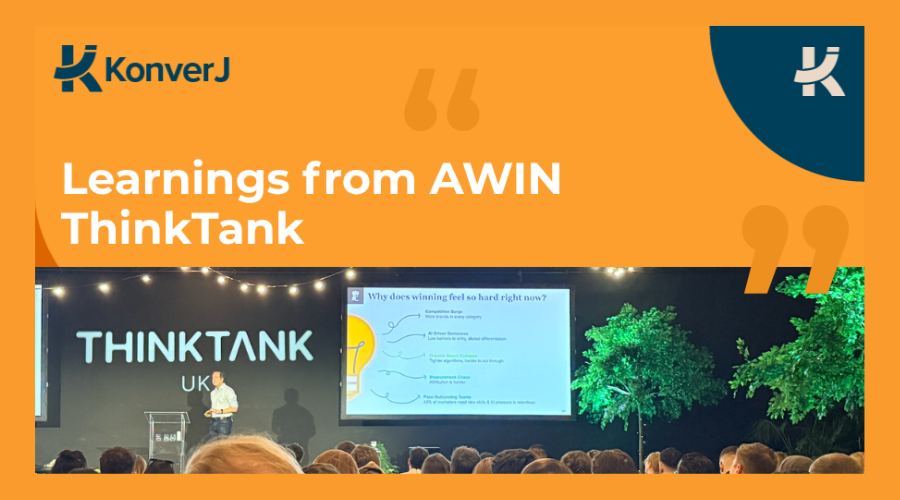
KonverJ leadership strengthens industry support as CEO Lee-Ann Johnstone joins the Performance Marketing Association’s new B2B Council. KonverJ is proud…
Read More