5 Reasons People Fail at Affiliate Marketing (And How to Avoid Them)

The affiliate marketing industry is projected to reach $37.3 billion globally in 2026, with US spending alone exceeding $11 billion. These numbers paint a picture of extraordinary opportunity. Yet industry estimates suggest that roughly 95% of people who attempt affiliate marketing never achieve sustainable income from it.
That statistic deserves serious examination. Not to discourage anyone from entering the field, but because understanding why so many fail is the first step toward becoming one of those who succeed.
After two decades in this industry, watching countless affiliates rise and fall, patterns emerge. The failures rarely stem from bad luck or market conditions. They stem from specific, identifiable mistakes that compound over time. More importantly, these mistakes are entirely avoidable once you recognise them.
1. Treating Affiliate Marketing as a Get-Rich-Quick Scheme
The most pervasive reason for failure is also the simplest: unrealistic expectations.
Social media is saturated with stories of affiliates earning thousands in their first month, quitting their jobs within weeks, or building “passive income empires” almost overnight. These narratives create dangerous expectations that set newcomers up for disappointment before they even begin.
Here’s what the data actually shows: affiliates with less than one year of experience typically earn around $636 per month. Most new affiliates see their first earnings within three to six months, but meaningful income usually arrives around the nine to twelve month mark. According to AuthorityHacker, affiliates with more than three years of experience earn 9.45 times more than beginners.
The timeline matters. Building an audience takes time. Developing content that ranks in search engines takes time. Earning trust from readers who will actually click your affiliate links and make purchases takes time. There are no shortcuts to this process, regardless of what any course or guru promises.
Research from Zeropark examined affiliate marketers who quit within their first week versus those who persisted. The pattern was clear: those who quit early had unrealistic expectations about immediate returns. They invested minimal time and budget, expected substantial results, and abandoned their efforts when reality failed to match their imagination.
The mindset shift required is significant. Affiliate marketing is not a lottery ticket. It’s a business that demands the same commitment, patience, and strategic thinking as any other business. The affiliates who succeed treat it accordingly.
What success actually looks like: Expect to invest six to twelve months of consistent effort before seeing reliable income. Plan financially to sustain yourself during this building period. Measure progress through metrics like content output, traffic growth, and email list building rather than immediate commission checks. The commissions will follow the fundamentals, not precede them.
2. Choosing the Wrong Niche (Or No Niche at All)
Approximately 45% of affiliate marketers cite traffic generation as their biggest challenge. Much of this struggle traces back to a fundamental strategic error: poor niche selection.
New affiliates frequently make one of two mistakes. Either they choose a niche so broad they cannot possibly compete, or they select a niche based solely on commission rates without considering their ability to create valuable content within it.
The broad niche problem is particularly common. Someone decides to enter “fitness” or “personal finance” or “technology” without further specialisation. They’re then competing against established sites with years of authority, thousands of backlinks, and content libraries that dwarf anything a newcomer could produce. The result is predictable: their content never ranks, their traffic never materialises, and they conclude that affiliate marketing “doesn’t work.”
The commission-chasing problem is equally destructive. High commission rates mean nothing if you cannot authentically serve the audience in that space. A financial affiliate who doesn’t understand investment products will produce shallow content that fails to convert, regardless of how attractive the commission structure appears.
Proper niche selection requires balancing multiple factors: genuine interest or expertise in the topic, sufficient market demand to support a business, manageable competition levels, and viable monetisation through quality affiliate programs.
According to research on targeted content, 40% of consumers prefer messages that speak directly to them, and targeted messaging achieves 5.3% higher click-through rates than generic alternatives. Niche specialisation enables this targeting. When you serve a specific audience with specific needs, your content resonates more deeply and converts more effectively.
The most successful affiliates dominate micro-niches before expanding. Rather than competing for “best running shoes,” they might focus on “best running shoes for flat feet” or “trail running shoes for beginners.” This approach requires less traffic to generate meaningful income because the traffic you do attract is highly qualified.
What success actually looks like: Choose a niche narrow enough that you can realistically become an authority within it, but large enough to support your income goals. Validate demand through keyword research and competition analysis before committing. Ensure you can sustain interest in the topic long enough to build genuine expertise. Your niche should sit at the intersection of personal passion, market demand, and realistic competitive opportunity.
3. Creating Content Without a Strategy
Content is the foundation of affiliate marketing. Without valuable content, you have nothing to attract an audience and nowhere to place your affiliate recommendations. Yet many affiliates approach content creation haphazardly, producing whatever comes to mind without strategic purpose.
The research on affiliate website failure is instructive. The primary reason sites fail is that they don’t provide genuine value. They rewrite information already available elsewhere, stuff articles with affiliate links without helping readers, and over-focus on SEO tactics at the expense of user experience.
One industry observer shared the example of a friend who started a VPN review site. He followed conventional SEO wisdom: keyword research, backlinks, long-form content. After six months, he had zero sales. The problem? His content was identical to every other VPN review site. Same features lists, same pros and cons copied from official product pages. His site was indistinguishable in a sea of identical reviews. Google ignored it, readers bounced, and no commissions materialised.
Successful affiliates create content that serves distinct purposes within a strategic framework. Comprehensive affiliate marketing guides distinguish between informational content that builds authority and attracts traffic, comparison content that helps readers evaluate options, review content that provides detailed product analysis, and conversion content optimised for purchase decisions.
Each content type serves different stages of the buyer journey. Attempting to convert visitors who are still in the research phase produces poor results. Creating only comparison content without informational content that attracts initial traffic leaves you without an audience to serve.
The quality threshold has also risen dramatically. AI can now generate passable content on virtually any topic. This means generic, surface-level content provides no competitive advantage. The content that succeeds in 2026 demonstrates genuine expertise, personal experience, and unique perspective. E-E-A-T signals (Experience, Expertise, Authoritativeness, and Trustworthiness) determine which sources search engines and AI systems choose to cite and recommend.
What success actually looks like: Develop a documented content strategy before producing any content. Map content to specific stages of the buyer journey. Prioritise quality and genuine value over publishing frequency. Create content that demonstrates actual expertise rather than repackaging existing information. If you cannot add genuine value to a topic, choose a different topic.
4. Ignoring Audience Building and Relationship Development
Many affiliates focus exclusively on traffic generation while neglecting audience building. The distinction matters enormously. Traffic consists of anonymous visitors who arrive, consume content, and leave. An audience consists of people who know you, trust your recommendations, and return repeatedly.
Research consistently shows that affiliates who invest in audience building dramatically outperform those who rely solely on search traffic. Affiliates using email marketing earn 66.4% more than those who do not. The reason is straightforward: email subscribers represent a relationship. They’ve opted into hearing from you, which means they’re significantly more likely to trust and act on your recommendations.
Yet building an email list requires offering value upfront. You need lead magnets that genuinely help your audience, not just promotional content in disguise. You need nurture sequences that build trust over time, not immediate sales pitches. You need to treat subscribers as people to serve, not wallets to extract value from.
The same principle applies to social media, community building, and every other audience development channel. Tips for beginners consistently emphasise that transparency is the cornerstone of building trust. Disclose affiliate relationships. Focus on creating valuable content that genuinely aids your audience. When you do this, affiliate marketing becomes a natural extension of your recommendations, not the sole objective.
The affiliates who struggle typically view their audience instrumentally: as a means to commissions rather than people to serve. This attitude manifests in content that prioritises conversion over value, recommendations that prioritise commission rates over product quality, and communication that feels promotional rather than helpful. Audiences detect this orientation quickly and respond accordingly.
Building genuine relationships takes longer than pursuing quick conversions. But the relationships compound over time while the quick conversions don’t.
What success actually looks like: Build an email list from day one, even before you have significant traffic. Offer genuine value to subscribers rather than treating them as a sales channel. Engage authentically in communities relevant to your niche. Focus on serving your audience well, trusting that commercial results will follow genuine value creation. The affiliates who succeed long-term are those their audiences trust, and trust is earned through consistent service, not claimed through marketing copy.
5. Failing to Treat Affiliate Marketing as a Real Business
The fifth reason synthesises elements of the previous four but deserves explicit attention: failing to treat affiliate marketing with the seriousness it requires.
Affiliate marketing has low barriers to entry. You can start with minimal investment, no inventory, no employees, and no office. This accessibility is genuinely advantageous. But it also creates a trap. Because starting is easy, many people never transition from “trying affiliate marketing” to “running an affiliate business.”
The difference manifests in dozens of small decisions. Business owners track their metrics systematically. Hobbyists check their dashboards occasionally. Business owners reinvest earnings into better tools, education, and content. Hobbyists extract whatever they earn immediately. Business owners analyse what’s working and double down on it. Hobbyists jump between strategies based on whatever they read most recently.
Industry data reflects this pattern. Those who quit affiliate marketing early were more likely to jump between many different campaign types rather than mastering one approach. They pursued “shiny objects” rather than systematic improvement. They made decisions based on hope rather than data.
Self-development in affiliate marketing is not optional. The industry evolves constantly. Algorithm updates have negatively impacted a quarter of affiliate marketers. Search is transforming through AI integration. Social platforms rise and fall. The affiliates who thrive are those who commit to continuous learning and adaptation.
Building a proper affiliate marketing business plan transforms speculative activity into structured business development. It forces clarity on your niche, your audience, your content strategy, your traffic sources, and your financial projections. It provides a framework for measuring progress and making informed decisions. It separates serious operators from those who are merely hoping something will work.
What success actually looks like: Document your strategy, track your metrics, and make decisions based on data rather than intuition or hope. Invest in your education continuously. Reinvest in tools and content that improve your business. Set realistic financial projections and measure against them. Treat setbacks as information rather than defeat. Build systems that can scale beyond your personal time investment. In short, run your affiliate marketing operation the way you would run any business you expected to succeed.
The Path Forward
The 95% failure rate in affiliate marketing is not inevitable destiny. It’s the aggregate result of specific, avoidable mistakes made by people who didn’t understand what they were getting into.
Understanding the real timeline, choosing appropriate niches, creating genuinely valuable content, building authentic audience relationships, and treating the endeavour as a serious business: these practices don’t guarantee success, but they dramatically improve the odds.
The affiliate marketing industry continues growing because it works. Businesses earn an average of $12 to $15 for every dollar invested in affiliate marketing. Over 80% of brands use affiliate programs because they drive results. The channel isn’t failing; many participants are simply approaching it incorrectly.
If you’re considering entering affiliate marketing or struggling with your current efforts, honest self-assessment is valuable. Which of these five failure patterns describe your approach? What would need to change for you to operate differently?
The affiliates who succeed aren’t necessarily smarter or luckier than those who fail. They’re simply more realistic about what success requires and more willing to do the work over the timeframe necessary. That’s a choice available to anyone.
For those ready to approach affiliate marketing seriously, comprehensive resources exist to guide the journey. The knowledge is available. The opportunity is real. What remains is the commitment to pursue it properly.
KonverJ’ agency team has been fully certified with Webgains, a leading UK affiliate network, strengthening its knowledge of the network,…
Read More
Affiliate Does More Than Win the Last Click Last week we attended Awin ThinkTank UK 2026. It was an interesting…
Read More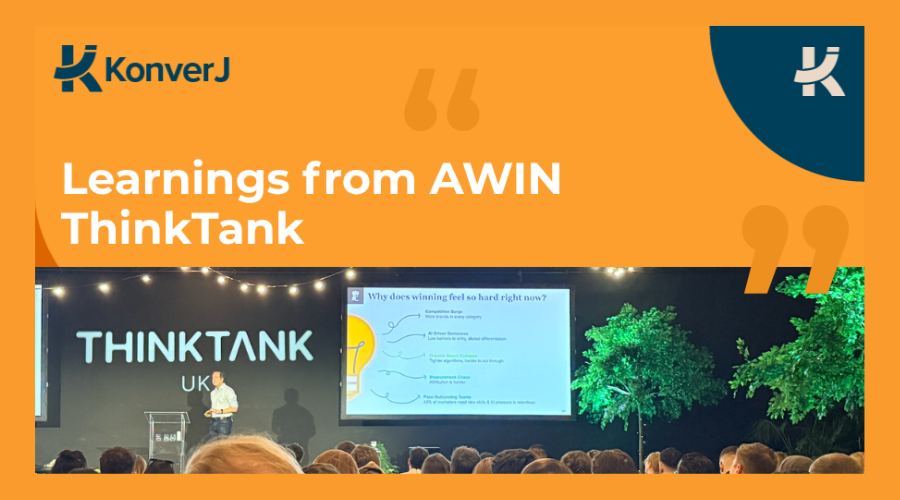
KonverJ leadership strengthens industry support as CEO Lee-Ann Johnstone joins the Performance Marketing Association’s new B2B Council. KonverJ is proud…
Read More